September 19, 2026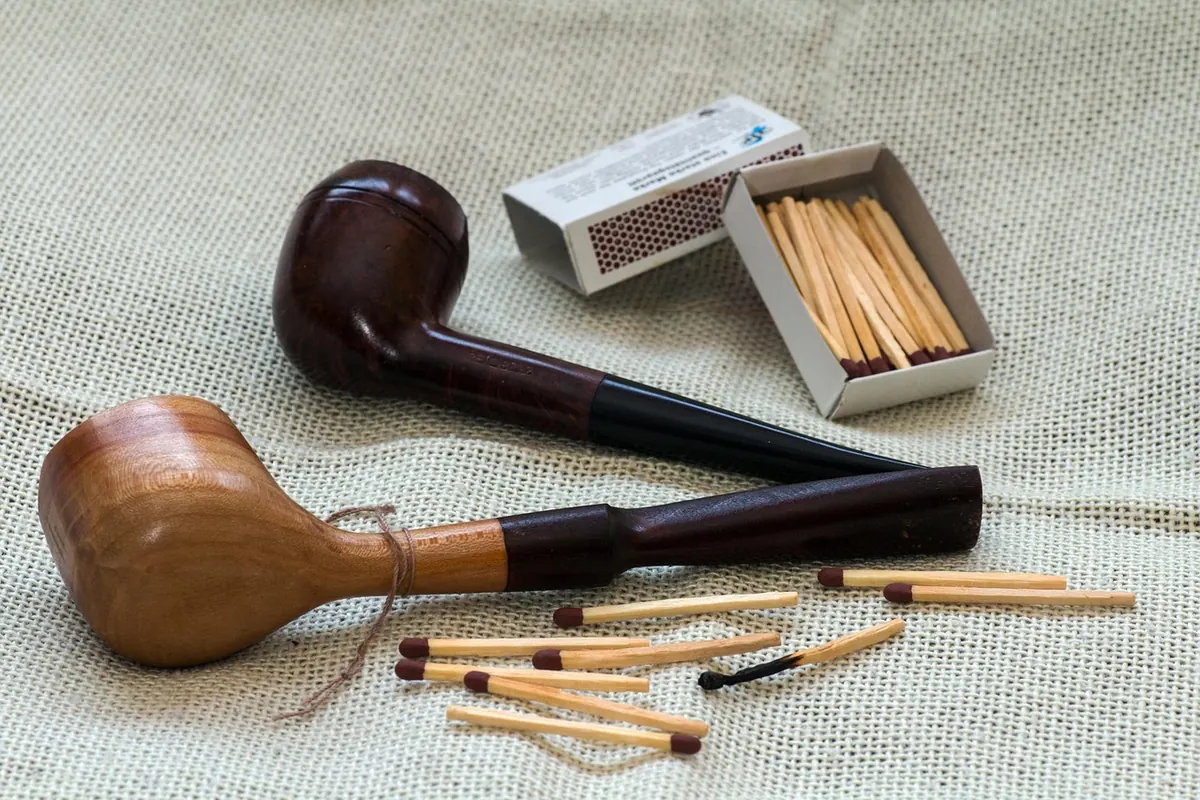
Ask a room of pipe smokers which classic they would hand a new collector and the same two names come up. Dunhill and Peterson have both been in production for well over a century, both have stubbornly loyal followings, and both turn up constantly on the estate market. They also do two quite different things.
A Dunhill Shell Briar is a sandblasted English pipe built around clean, conventional drilling and traditional shaping. A Peterson System is a bent Irish pipe built around a moisture trap that catches what would otherwise end up in your mouth. Knowing which problem you want solved makes the choice much easier.
The Short Version
The Shell Briar is a finish and a drilling standard. The System is a piece of engineering. One rewards a smoker who keeps tobacco at the right moisture and sips slowly; the other forgives a wet blend or a brisk cadence by parking the moisture in a reservoir below the airway.
Neither is better in the abstract. They are simply aimed at different habits, and most collectors end up with one of each before long.
Dunhill Shell Briar: The Blast and the Brand
Design
Dunhill introduced the Shell finish in 1917 and it has barely changed since. The bowl is sandblasted deeply enough to strip away the softer wood between the growth rings, leaving the harder grain standing proud. That makes a Shell lighter than a smooth briar of the same size, with a texture that sits well in the hand and a dark stain that hides handling marks.
Shapes are traditional English: billiards, bulldogs, apples, Canadians, pots. Group sizes run from 1 to 6, with Group 4 the benchmark medium. A white spot on the stem identifies the brand; the rest of the story lives in the stamping.
Drilling
Dunhill's drilling is conventional and precise. The draft hole meets the bottom of the chamber, and the shank is drilled straight through to a mortise that takes a snug tenon. Older pipes often came with a thin aluminium inner tube in the tenon, meant to smooth airflow and keep tars out of the airway. It is optional. Keep it clean if you use it, remove it if you prefer a wider draw, and make sure it hasn't seized before you pull on a vintage pipe.
Because the airway runs in a straight line, a pipe cleaner passes easily through most Dunhill shapes. New smokers underestimate how much that matters: a quick swipe mid-bowl can rescue a smoke that has started to turn sour.
How It Smokes
Directly. Flavour arrives with little interference, which is a gift with Virginia flakes and English mixtures and a mild disadvantage if you smoke wet. Moisture that a System pipe would trap instead swirls around the airway. Technique does the work here: dry the tobacco, pack a little looser than feels natural, and sip rather than pull.
Peterson System: The Sump That Changed Everything
Design
Charles Peterson's patent dates to 1890, and the design is still visible in every System pipe. The draft hole from the bowl enters the mortise high, and a deep reservoir sits below it in the shank. Smoke and moisture drop into that sump, then rise into the stem. Tar and saliva collect there instead of in the airway or your mouth.
System pipes carry three-digit shape numbers beginning with 30, where the third digit denotes the shape and its size. Standard, Premier and Deluxe versions differ mainly in finish, stem work and silver mounts rather than in the mechanics.
Stem and P-Lip
Classic Systems come with a P-Lip stem, which sends the smoke toward the roof of the mouth instead of the tongue, and a bore that graduates — narrows — toward the button. Some smokers find it distinctly cooler and less bitey. Others never adjust and fit a standard stem instead.
How It Smokes
Reliably dry, provided you maintain it. Aromatics, wet flakes and hurried puffing are all handled with far less fuss than a straight-drilled pipe allows. The trade-off is a slightly muted, filtered feel to the first few bowls, and an absolute dependence on cleaning. Let the sump fill with tar and the pipe turns bitter quickly.
The Dunhill asks you to smoke well. The Peterson helps you smoke well.
Side by Side
- Airway: Dunhill runs straight and short. Peterson drops into a sump and climbs back up.
- Moisture: The System traps it in the shank. The Shell sends it toward your palate unless you manage your cadence.
- Mid-smoke maintenance: A cleaner slides through a straight Dunhill. On a full-bent System you can only swab the reservoir without pulling the stem.
- Cleaning load: The System needs its sump emptied and wiped after every smoke. The Shell is forgiving of a missed day.
- Feel in the mouth: The P-Lip spreads smoke across the roof of the mouth. A standard Dunhill bit is a conventional slot.
- Shape range: Dunhill leans toward straight English shapes. Peterson is best known for bent Systems, though it makes straight pipes too.
- Buying new: Dunhill is a premium purchase. System Standards are widely available and comparatively affordable.
Cleaning Both, Properly
- Run a cleaner through the stem first, while the pipe is still warm but not hot.
- On a System, bend a cleaner into a U and wipe the sump after every bowl. A cotton bud works well for the corners.
- Let the pipe cool completely before removing the stem. A hot mortise wears and loosens faster than most smokers realise.
- Ream sparingly, a little at a time, and never scrape
Photo: domeckopol / Pixabay